Sensory Vertical · July 26, 2026 · 3 min read
Resonance: What Answers Back (DETOX)
Hartmut Rosa made the case: the opposite of alienation is not autonomy, it is resonance — that relation to the world where something touches us and transforms us in return. A feed does not resonate: it reacts. It amplifies what we already were. Matter resists. That is the entire difference.
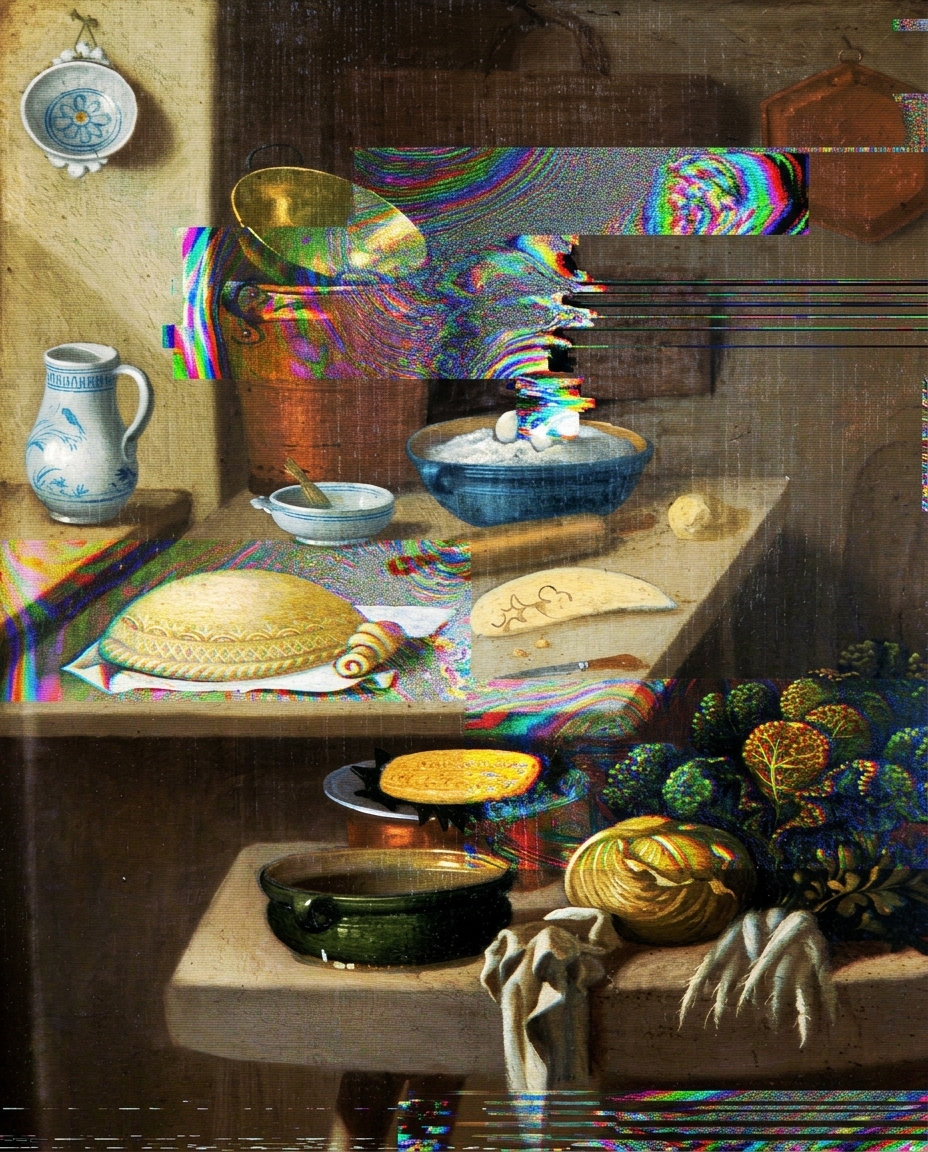
Two gestures, one morning.
Open a feed. Scroll. The content adjusts, anticipates, surfaces what you already liked — only slightly refined. Nothing resists. Nothing truly surprises. You glide.
Then knead a dough. Or repot a plant whose roots have long outgrown their container. The matter pushes back. It resists under the palm, yields in some places and holds firm in others. It has its own constraints. It answers you.
These are not the same experience. The difference is not speed, or productivity, or even pleasure. It is a question of how you stand in relation to the world.
What Rosa means by resonance
In Resonance (2016), Hartmut Rosa builds a disturbing argument: modern alienation is not the absence of freedom. We have never had more options. It is not the absence of comfort either. The problem lies elsewhere — it is the absence of resonance.
Resonance, for Rosa, is the relation to the world in which something touches us, affects us, and transforms us in return. A two-way current: we act on the world, and the world acts on us. We leave the experience different. The matter has said something.
Its opposite is not silence. It is what Rosa calls mute availability: an infinitely accessible world that does not answer. That reacts, but does not resonate.
The difference between reacting and answering
A recommendation algorithm reacts. It reads what you already wanted, what you already liked, and amplifies it. It is exquisitely sensitive to your signals. But it does not surprise you in any deep sense — it does not displace you. It confirms. The world that appears in the feed is a mirror of what you already were.
Matter has not read your history. It obeys its own laws. Clay cracks if you move too fast. A failed fermented dough smells different depending on the starter, the temperature, the day. Fabric behaves differently across the grain. These resistances are not obstacles to work around — they are the very condition of resonance. They signal that something is there, facing you, existing independently of you.
That alterity is what transforms. You cannot knead a dough without learning something about the dough, and about your own hands.
Not nostalgia. Infrastructure.
To say that the sensory resonates is to risk being misread. People hear: retreat, decorative craft, slow living as Instagram aesthetic. That would be exactly the opposite.
Rosa is not praising the past. He is describing an anthropological structure. Human beings require resonant relations to avoid sliding into alienation, and those relations demand real resistance from the world. Matter, the body, smell, the precise gesture that fails before it succeeds — these are resonance devices. Not leisure. Infrastructure.
This is why sensory crafts — perfumery, cooking, ceramics, textile — are not survivals that automation has not yet reached. They sustain a mode of relation to the world that digital interfaces are structurally incapable of producing. Not because they are beautiful or authentic. Because they answer back.
Detox is a dead end
The dominant response to digital saturation is the detox. Unplug. Put down the phone. Disconnect on weekends. The intention is sound; the framework is wrong.
You do not exit a relation to the world by subtraction. The void left by the feed is not filled by resonance — it is filled by boredom, then by the return to the feed. What changes a relation to the world is another relation to the world. Something that resists, that answers, that engages differently.
The sensory is not the break that comes after the screen. It is what the screen — unlike anything you can hold in your hands — has stopped teaching you.
References
Authors cited
The letter
Analysis, reversals, tenable hypotheses.
SUBSTACK · NAKKAMA.SUBSTACK.COM