AI Operator · August 27, 2026 · 4 min read
Small, slow, local: computational luxury
Running an LLM on your own machine is not a technical compromise - it is a political choice. Ivan Illich called this a convivial tool: one that amplifies the autonomy of the person using it, rather than making them dependent. The premium of tomorrow is not the biggest model. It is the model you can open, repair, stop.
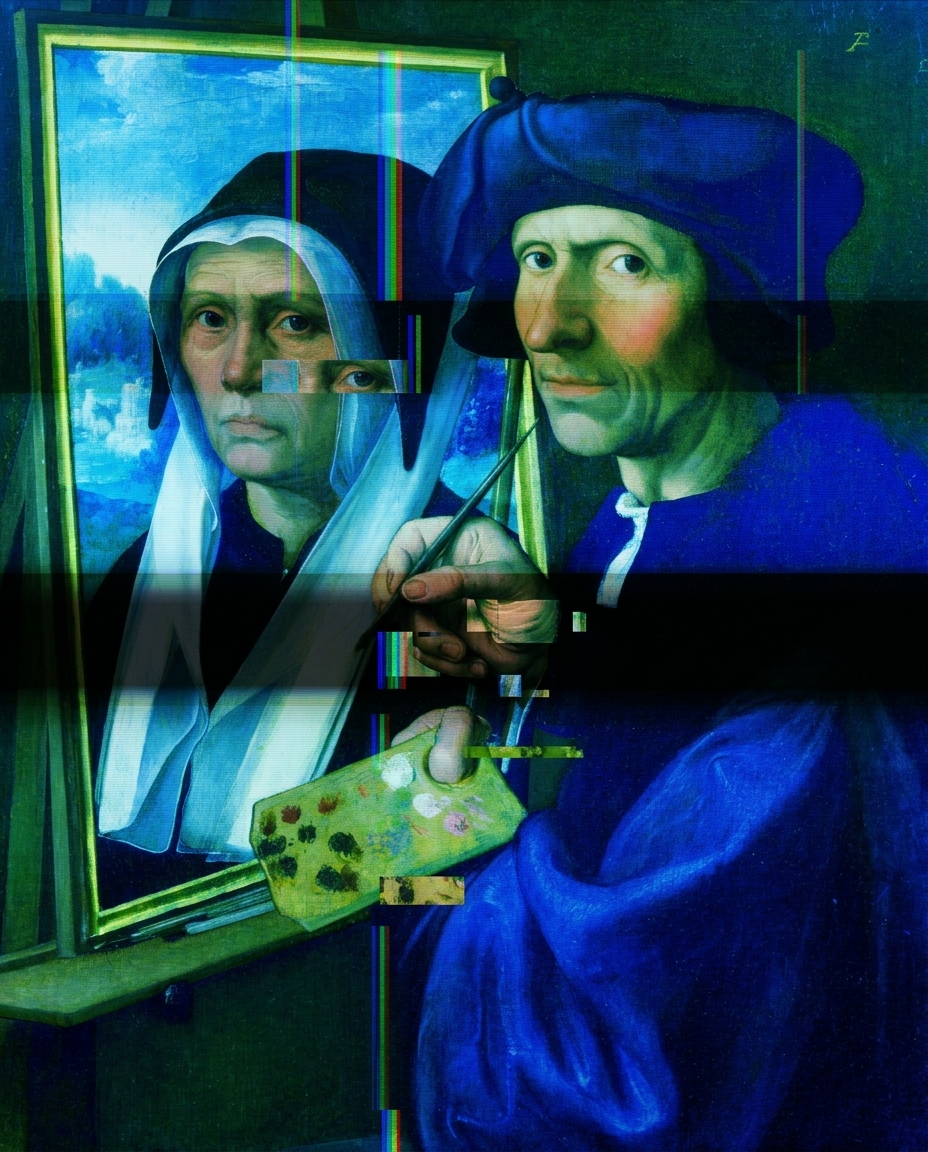
16 gigabytes of RAM. A model quantized to 4 bits. An open terminal, a session that boots in three seconds. No API key, no quota, no transatlantic latency. No 47-page contract specifying that your queries may be used to improve the product.
That is a local-first pipeline. And it is not a fallback.
Constraint as grammar
Permacomputing asks a simple question: what can we do with what we have, sustainably, without depending on infrastructure we do not control? This is not aesthetic minimalism. It is a position on the relationship to tools.
Ivan Illich called this a convivial tool — a tool the user masters, one that does not invert the relationship by turning them into a servant of the system. The opposite of a convivial tool is an institutional prosthetic: you adapt to it, you pay, you feed its growth. ChatGPT, Claude, Gemini are brilliant tools. They are not convivial in Illich’s sense. They grow with you, not for you.
A local model on 16 GB of RAM is constrained. It does not do everything. But what it does, it does without answering to anyone else. Constraint is the grammar of mastery.
What the cloud consumes
Bernard Stiegler spent much of his career describing a process he called cognitive proletarianization: the movement by which the externalization of technical functions progressively impoverishes the practitioner’s knowledge. When know-how leaves the hands and enters the machine, the hands forget. When knowledge leaves the hands and enters the cloud, the knowledge belongs to the cloud.
This is not a metaphor. Every query sent to a third-party model is a fragment of the way you think, formulate, problematize — circulating inside infrastructure you do not control, infrastructure that learns from you without compensating you, and that may very well train tomorrow’s model for your direct competitor.
Shoshana Zuboff named this mechanism: the surveillance economy does not steal your data, it extracts your behaviors as raw material to predict and steer the behaviors of others. The cloud language model is a perfect extension of that logic. You teach it your way of reasoning. It bills that to everyone.
The computationally irreproducible
In a previous piece, the logic of the sensory vertical made a proposition: when everything becomes reproducible, the irreproducible becomes premium. The hand that leaves a trace, the gesture that cannot be delegated, the singular object — these are the new signals of value.
The same logic applies to computation.
A model fine-tuned on your own corpus, your own documents, your own way of working, running on your own machine — that model is irreproducible. It resembles no other. It has absorbed your vocabulary, your style, your distinctions. It is a computational extension of your practice, not an interface to a generic intelligence rented by the month.
The premium of tomorrow is not the biggest model. It is the model you own.
To own is to stop running
Owning a local model means accepting its limits. A quantized 7-billion-parameter model does not rival a frontier model on complex reasoning tasks. But it does what you ask, unconditionally, without delay, without a subscription. It runs offline on a train, in a workshop, in any space where data must not leave.
And above all: it teaches nothing to anyone else. What you give it stays there. Your knowledge, your way of structuring a brief, your framework for analyzing a market — all of it remains in your RAM, on your drive, under your control.
This is the computational equivalent of the craftsperson who guards their techniques. Not out of nostalgia. Out of strategy.
What it takes
Nothing beyond the reach of a serious operator. A Mac with 16 GB of RAM is enough to run models capable of handling editorial tasks, summarization, classification, structured generation. Ollama, LM Studio, clean interfaces — the ecosystem exists, it is stable, it is free.
What it actually requires is a positional choice. Deciding that infrastructure matters. That dependency carries a cost that does not appear on the invoice. That knowledge you let escape does not come back.
Illich wrote that the convivial tool is the one that leaves the user the greatest latitude to shape the world according to their own intentions. Running your own model, at home, on your own terms — that is exactly what this is.
Everything else is renting out your brain.
The letter
Analysis, reversals, tenable hypotheses.
SUBSTACK · NAKKAMA.SUBSTACK.COM